Phil Schneider, Ed.D. CCC-SLP, joins Peter Reitzes to discuss how to respond to speech-language pathologists and people who stutter who say “tell me what to do.” Dr. Schneider is also asked to discuss the role of people who stutter giving advice to one another. A good alternate title for this episode is “Honor the Listening.”
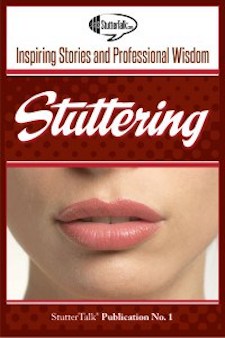
PHIL SCHNEIDER is a Board Recognized Fluency Specialist, an Associate Professor Emeritus of Communication Disorders at Queens College, has been in private practice for more than 35 years and is an adviser to StutterTalk. Phil wrote, with Uri Schneider, the chapter titled “Soul-utions in Therapy for People Who Stutter” in the StutterTalk book Stuttering: Inspiring Stories and Professional Wisdom available at Amazon and elsewhere in paperback and as an ebook. To find out more about the work Phil and his colleagues do, go to schneiderspeech.com.
During today’s episode Phil mentioned these fine referral lists:
CARYN HERRING, ROISIN MCMANUS, and JOEL KORTE (the “Stuttertalk B Team“) discuss Joel’s current struggles with stuttering as well as “Speech Tool Guy,” a concept he made up and introduced in episode 374. Joel loosely defines “Speech Tool Guy” as a character who is never ashamed of stuttering, using speech tools, or being fluent. Roisin shares a “healthy skepticism” of Speech Tool Guy while Joel tries to figure out the best direction for controlling his stuttering.
Joel shares that, “Every time I try really, really hard not to stutter, it’s a disaster.”
Reuben Schuff and Joel Korte join Peter Reitzes to discuss crucial stuttering experiences in speech therapy as proposed by Charles Van Riper.
Dr. Van Riper’s list of 15 crucial stuttering experiences is archived here at The Stuttering Homepage. Some of the items we discuss from Van Riper’s list are:
“The stutterer is responsible for his own behavior – including his stuttering.”
“Stuttering can be deliberately endured, touched, and maintained and studied.”
“Avoidance increases fear and therefore stuttering, and it must be reduced.”
“It is possible to release oneself voluntarily from tremors, fixations, and oscillations.”
“When a moment of stuttering occurs, it should be studied, and its evil effects should be erased as much as possible.”
Van Riper explained, “These are the crucial experiences which your therapy should provide for the person who stutters. Again and again you must seek to facilitate these basic experiences. These should be the goals which structure your therapy.”
An alternative title for this episode could be something Reuben said during the episode – Stuttering: A Collection of Avoidance Behaviors.
REUBEN SCHUFF is an Aerospace Engineer. He co-founded the Teens Who Stutter (TWST) chapter of the National Stuttering Association (NSA) in Raleigh, North Carolina.
JOEL KORTE is an electrical engineer and attends a masters program for Speech-Language Pathology at the University of Minnesota. Joel works as a design engineer for ZVEX Effects, a highly regarded guitar effects company. Joel is a musician in a Minneapolis based band, Ghost Towns of the West. Joel is not only a B Team host, but he is the technical guru who records and edits all of their episodes.
PETER REITZES is a person who stutters and a speech-language pathologist.
Next Week: Stuttering and Singing
Next week StutterTalk plans on discussing singing and stuttering. Leave us your thoughts and questions at the StutterTalk Facebook group or send us an email. We may discuss your comments on air.
Frank Stetchel joins Peter Reitzes to discuss aging and stuttering, culture and stuttering, acceptance of stuttering and much more. Frank also weighs in on some topics and discussions he has heard over the years on StutterTalk regarding the state of speech therapy, embracing and accepting stuttering, fluency shaping and more.
FRANK STETCHEL is a person who stutters in New Jersey, a board member at his synagogue, co-leads the Brooklyn chapter of the Jewish Stuttering Association and is retired from a professional career as a vocational rehabilitation counselor, supervisor and manager in the New York State Education Office.
Next week on StutterTalk Peter hopes to speak with Joel Korte and Reuben Schuff about crucial stuttering experiences and strategies as suggested by Charles Van Riper.
CARYN HERRING, ROISIN MCMANUS, and JOEL KORTE (the Stuttertalk “B Team“) discuss Roisin’s recent experiences learning Spanish and taking a three week trip to Guatemala. They wrap up the show by discussing Lazaro Arbos’ wonderful audition on American Idol.
Reuben Schuff joins Peter Reitzes to discuss Lazaro Arbos, an American Idol contestant who stutters, stuttering paradoxes and the Ted Talk video Stuttering and the Art of Mountain Biking featuring Richard Holmes, a person who stutters.
REUBEN SCHUFF is an Aerospace Engineer and founded (with Rita Thurman) a Teens Who Stutter (TWST) chapter of the National Stuttering Association (NSA) in Raleigh, North Carolina. Reuben contributed the first chapter titled “Fluency: My Untrustworthy Friend” in the StutterTalk book: Stuttering: Inspiring Stories and Professional Wisdom. Reuben was interviewed about his chapter on StutterTalk. Click here for all of Reuben’s StutterTalk appearances.
During this episode, when discussing stuttering paradoxes, Peter and Reuben praise the Our Time Theatre Company and Camp Our Time and the awesome services they offer to the stuttering community.
StutterTalk® is a 501 (c)(3) non-profit organization dedicated to talking openly about stuttering. StutterTalk is the first and longest running podcast on stuttering. Since 2007 we have published more than 700 podcasts which are heard in 180 countries.










10 Mar 2013
Stuttering: Tell Me What To Do (388)
Podcast: Play in new window | Download
Subscribe: Apple Podcasts | Google Podcasts | Stitcher | TuneIn | RSS
Phil Schneider, Ed.D. CCC-SLP, joins Peter Reitzes to discuss how to respond to speech-language pathologists and people who stutter who say “tell me what to do.” Dr. Schneider is also asked to discuss the role of people who stutter giving advice to one another. A good alternate title for this episode is “Honor the Listening.”
PHIL SCHNEIDER is a Board Recognized Fluency Specialist, an Associate Professor Emeritus of Communication Disorders at Queens College, has been in private practice for more than 35 years and is an adviser to StutterTalk. Phil wrote, with Uri Schneider, the chapter titled “Soul-utions in Therapy for People Who Stutter” in the StutterTalk book Stuttering: Inspiring Stories and Professional Wisdom available at Amazon and elsewhere in paperback and as an ebook. To find out more about the work Phil and his colleagues do, go to schneiderspeech.com.
During today’s episode Phil mentioned these fine referral lists:
Related Episode: How To Be an Educated Consumer (83) with Dr. Phil Schneider.