


29 Jun 2017
Is Anticipating Stuttering Ever Productive? (Ep. 621)
Podcast: Play in new window | Download
Subscribe: Apple Podcasts | Google Podcasts | Stitcher | TuneIn | RSS

Richard Arenas joins Peter Reitzes for an unprecedented second consecutive week to discuss if anticipating stuttering can ever be productive, to answer questions submitted by listeners and researchers and to preview his upcoming speech at the National Stuttering Association’s 2017 Research Symposium.
Richard Arenas, Ph.D, is an Assistant Professor at the University of New Mexico. His research aims to understand the contextual variability of stuttering, specifically the biological mechanisms that underlie this variability. The goal is to translate research findings in to more effective treatments for stuttering. Dr. Arenas will be speaking this summer at the 2017 National Stuttering Association’s Research Symposium in Dallas, Texas. Dr. Arenas’ presentation will be based on his paper Conceptualizing and investigating the contextual variability of stuttering: The speech and monitoring interaction (SAMI) framework.
Related Episodes:
- The Anticipation of Stuttering (Ep. 620) with Dr. Richard Arenas
- Mindfulness in Stuttering Treatment (Ep. 321) with Dr. Michael Boyle
Related Research:
- Responses of adults who stutter to the anticipation of stuttering (Jackson et. al).
- Anticipation in stuttering: A theoretical model of the nature of stutter prediction (Garcia-Barrera & Davidow)
- A preliminary study on the neural oscillatory characteristics of motor preparation prior to dysfluent and fluent utterances in adults who stutter (Mersov et. al)




7 Jul 2017
The Positive Vulnerability of Stuttering at the 2017 NSA Conference (Ep. 622)
Podcast: Play in new window | Download
Subscribe: Apple Podcasts | Google Podcasts | Stitcher | TuneIn | RSS
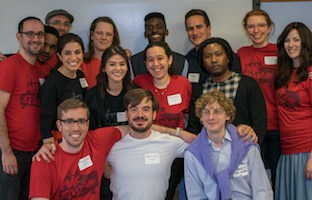
Jia Bin, Elizabeth Wislar and Reuben Schuff join Christopher Constantino at the 34th annual National Stuttering Association (NSA) conference in Dallas, Texas.
They discuss conference highlights so far which include Lee Reeve’s keynote, Barry Yeoman and Chaya Goldstein’s movement workshop, Yeoman and Constantino’s masculinity workshop, the positive vulnerability of stuttering, the kids’s talent show and their open stuttering on stage, role models of all ages, Schuff’s Avoidance Reduction workshop followed by the difficult and meaningful break out sessions and so much more.
Jia Bin is a person who stutters from China living in Michigan. Ms. Bin is a high school Chinese Teacher.
Elizabeth Wislar is a person who stutters and a teacher of students with disabilities. She lives in Athens, Ga. USA with her husband, daughter and 7 pets. She loves to run, cook, read and write. She is a co-leader of the Athens, Georgia National Stuttering Association chapter and writes a blog about being a teacher who stutters.
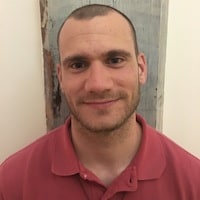
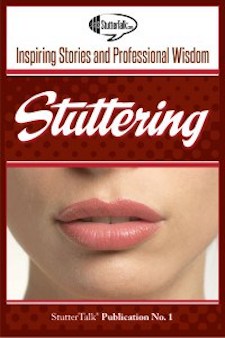
Reuben Schuff is an author and roving host for StutterTalk. By profession and passion he is an aerospace engineer, and also, a traveler, a juggler, a Toastmaster, and a person who stutters. He is a workshop presenter for the National Stuttering Association’s annual conference and is the co-founder of the Raleigh Teens Who Stutter (TWST) chapter of the NSA. Reuben also facilitates and presents with FRIENDS (the National Organization for Young People who Stutter). Reuben is author of the chapter Fluency: My Untrustworthy Friend in the StutterTalk book: Stuttering: Inspiring Stories and Professional Wisdom.
Christopher Constantino, CCC-SLP, is a person who stutters, a StutterTalk host, and a PhD student in Communication Sciences and Disorders at the University of Memphis. Chris is an ASHA certified, Tennessee licensed, speech-language pathologist at Shelby County Schools in Memphis, TN. His research has sought to understand and contextualize the experiences of passing as fluent for people who covertly stutter. Currently he is studying the subjective experience of stuttering, he is interested in defining and measuring the degree to which communication feels spontaneous, regardless of fluency. Chris’s StutterTalk episodes are known for finding common ground between disability rights and speech-language pathology.